

Spanish guitar
You can start improvising Spanish-style guitar with one scale and two licks: the E Phrygian scale, a baby chords lick and a pull-off lick, all played over a backing track.
Many guitar players want to improvise Spanish guitar one day, and then put it off because it looks too complicated. A lot of lessons make it more theoretical than it needs to be. This one starts with a few building blocks you can play right away, on a nylon-string or a steel-string guitar.

Start With the E Phrygian Scale
The most useful scale for Spanish-style improvisation is the E Phrygian scale. Don’t let the name fool you; it’s a friendly scale and a good one to start with. It sits in open position, and the fingering matches the fret number: first finger on the first fret, second finger on the second fret, third finger on the third.

Don’t worry if it doesn’t come right away. Practice it at your own pace.
A great way to practice the scale, and to start getting the hang of improvising, is to play it along with a backing track. Don’t try too hard to get it perfect; let it flow and listen to how the scale sounds with the track. It’s fine to start with just a few notes and add more as you go.

The Baby Chords Lick
This lick uses two chord shapes you probably know, D minor and D. Use any fingering you’re comfortable with.
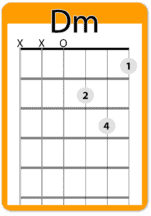
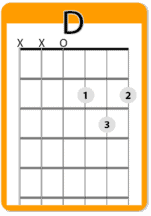
- Take the D minor shape and move it up so your first finger is on the first string at the eighth fret.
- Make the D shape with your first finger at the seventh fret.
- Move that D shape down two frets, to the fifth fret.
- Then one more fret down, to the fourth fret.
What you’re actually playing is A minor, G, F and E, the same chords as the Andalusian cadence that gives so much Spanish music its sound. Pick them any way you like; I fingerpick them. There’s no one right rhythm or order for the notes, so play around with it. You can hear the lick at 3:38 in the video.
The Pull-Off Lick
This one sounds a lot harder than it is. Use the same frets as the baby chords lick, with your first finger on the first string: eighth, seventh, fifth and fourth frets. Now pull off each note to the open string.
Pull a little to the side rather than straight up, so you’re almost picking the note with your left hand, and do it fairly quickly so the note doesn’t get muted.
Don’t get stuck on doing it exactly the way I do. Try other notes and see how they sound. One I like: add a note at the 11th fret. You can hear this lick at 4:15 in the video.
Next: A Song to Play
Improvising is a lot of fun, and it’s also good to have something structured you can play for other people. Try this Spanish guitar song for beginners next.
Want more lessons like this one? Try Real Guitar Success free for 14 days.
Great Spanish guitar lesson. I'm going to try it.
Awesome tutorial on fingerpicking / Spanish /Flamenco a little but just amazing. I am really picking it up… thank you